Inaugural Exhibition
Curatorial Gallery, London
25 Thurloe Street, South Kensington.
April 2 to May 9, 2026
Private View: April 2nd, 6-8 pm
Katrien de Blauwer, Sissi Farassat, Janice Guy, E.O. Hoppé, Justine Kurland.
Curatorial Gallery is pleased to present Through Their Eyes: Women Portraying Themselves, the inaugural exhibition at the gallery’s new physical space in South Kensington, London. Bringing together contemporary artists working in photography and mixed media, the exhibition examines representation through the mechanisms of self-portraiture, appropriation and collage, often through unique, non-editioned artworks.
Historically, women have frequently appeared in visual culture as subjects shaped by external perspectives rather than as the authors of their own image. The artists in Through Their Eyes challenge this legacy by reclaiming the act of portrayal. Through photographic and mixed-media practices, their works explore how identity is constructed, performed, and mediated through the lens of the self.
Across the exhibition, self-representation functions not only as personal expression but also as a conceptual strategy through which broader questions of gender, visibility, and subjectivity are addressed.
The exhibition follows Curatorial Gallery’s debut presentation at Paris Photo 2025 and marks the beginning of the gallery’s programme in London. Building on Curatorial’s wider curatorial and advisory practice, the gallery aims to foster dialogue around photography and image-based practices while connecting artists, collectors, and audiences through thoughtfully conceived exhibitions.
Through Their Eyes: Women Portraying Themselves inaugurates the space with a presentation that foregrounds the power of artists to reclaim and redefine their own image.
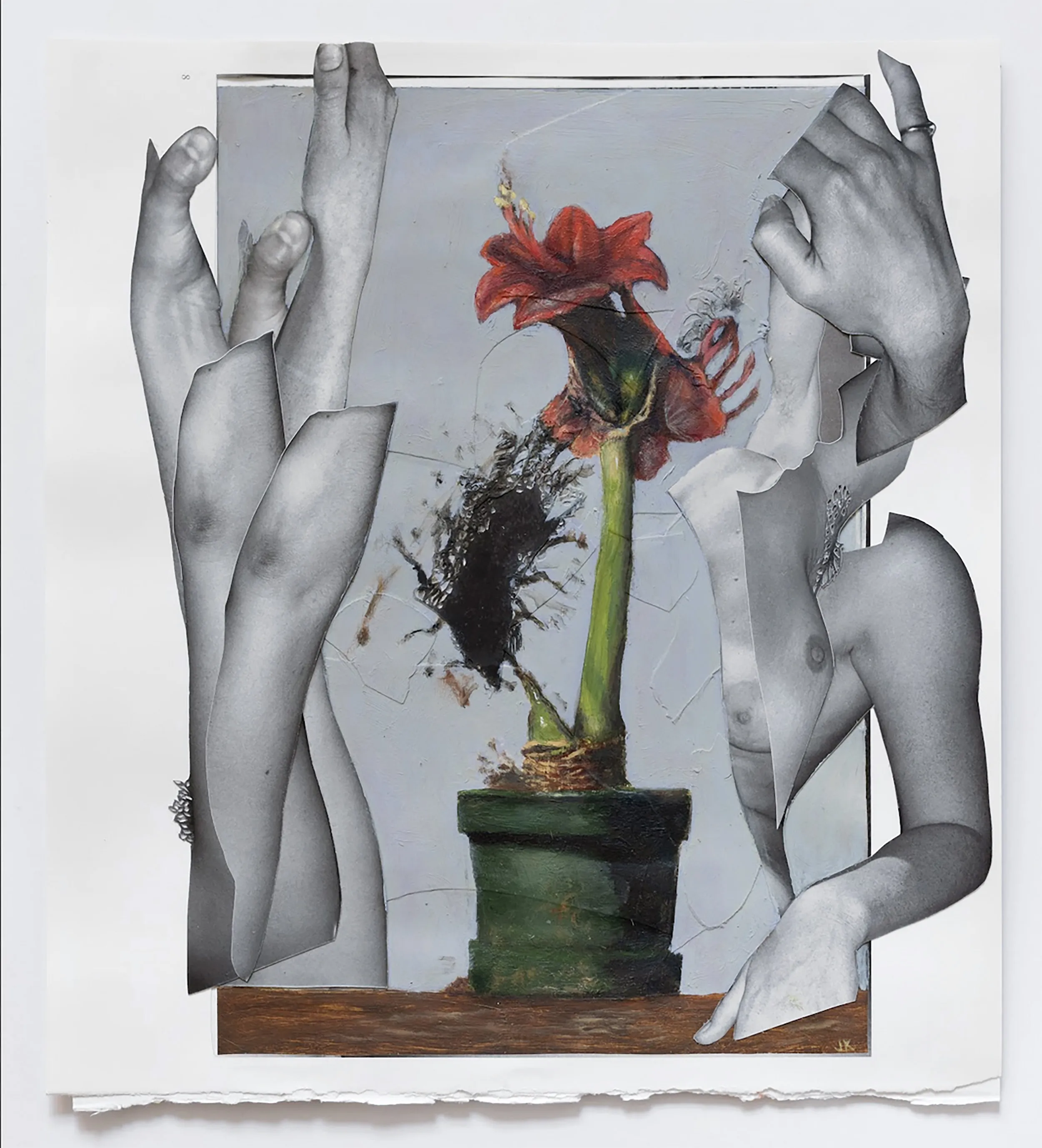
Justine Kurland, Amaryllis and Fly, 2025-2026
Unique painted photo-collage, 25x28cm
Appropriation, a recurring practice in the work of de Blauwer, Farassat and Kurland, forms an intgral framework in the exhibition. With Kurland it conjoins photography and painting, making bedfellows of Lee Friedlander’s photographs and the artist’s father’s painting. In a multilayered practice, something truly unique emerges. Is it a photograph? Is it a painting? Where is the ‘me’ here for a woman artist, who borrows work by other men?
In doing so Kurland takes herself totally out of the equation, transcending her own ego and thus creating a new space for women outside of representation altogether. Ironically, something totally fresh and unique emerges. Collage and decoupage, mechanisms which neither man uses, are mastered by Kurland and a practice which is truly her own, wins.
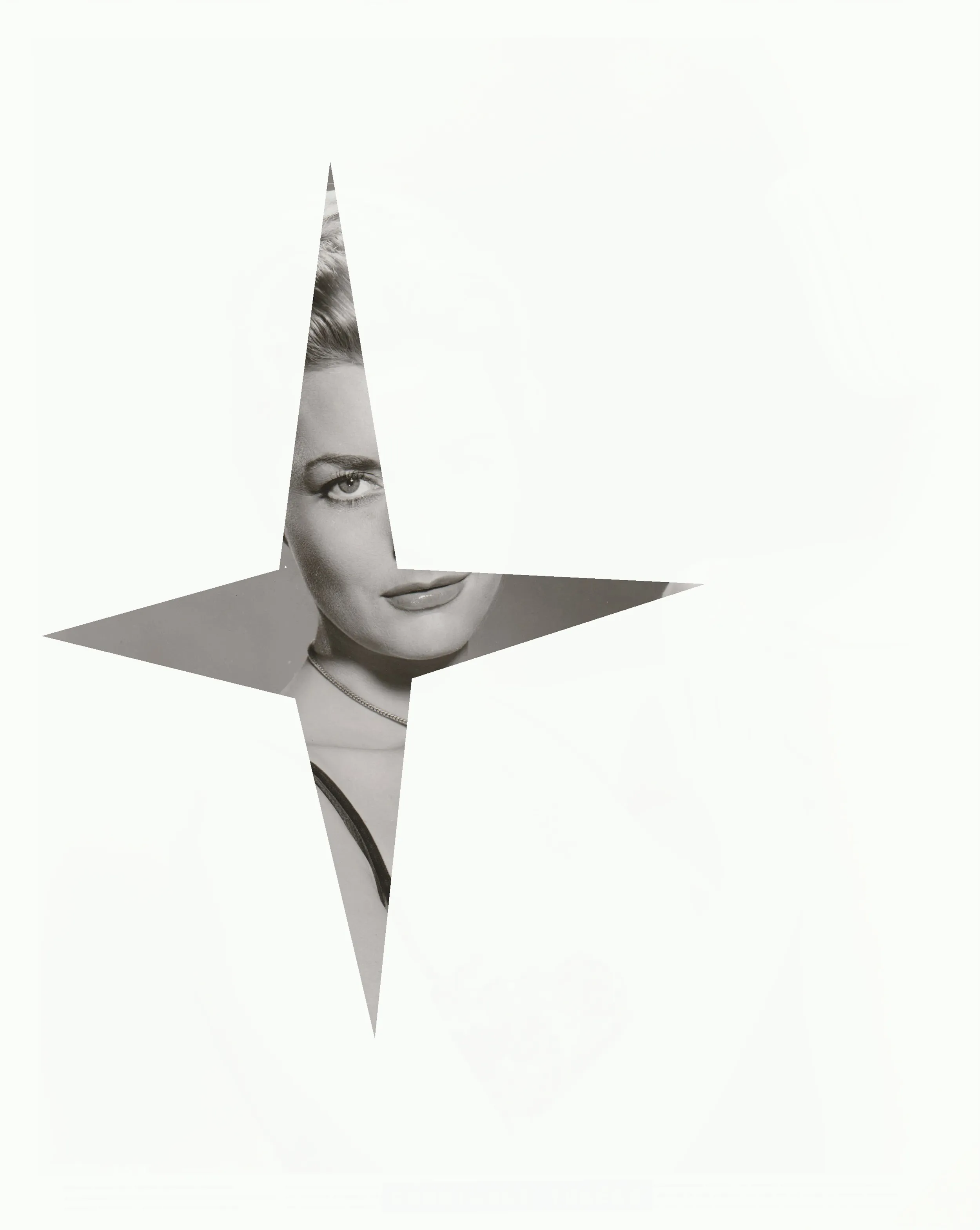
Sissi Farassat, Constanz, from the series Revelations, 2025
Unique gelatin silver print photomontage, 22 x 26cm
With Farassat and de Blauwer what you see is definitely not what you get. They are in control in what they show us, but more importantly, of what is hidden. These heroines, which are recontextualised outside of their natural habitat of the silver screen, become sirens, standing in their own power, without a male co-star to be seen anywhere.
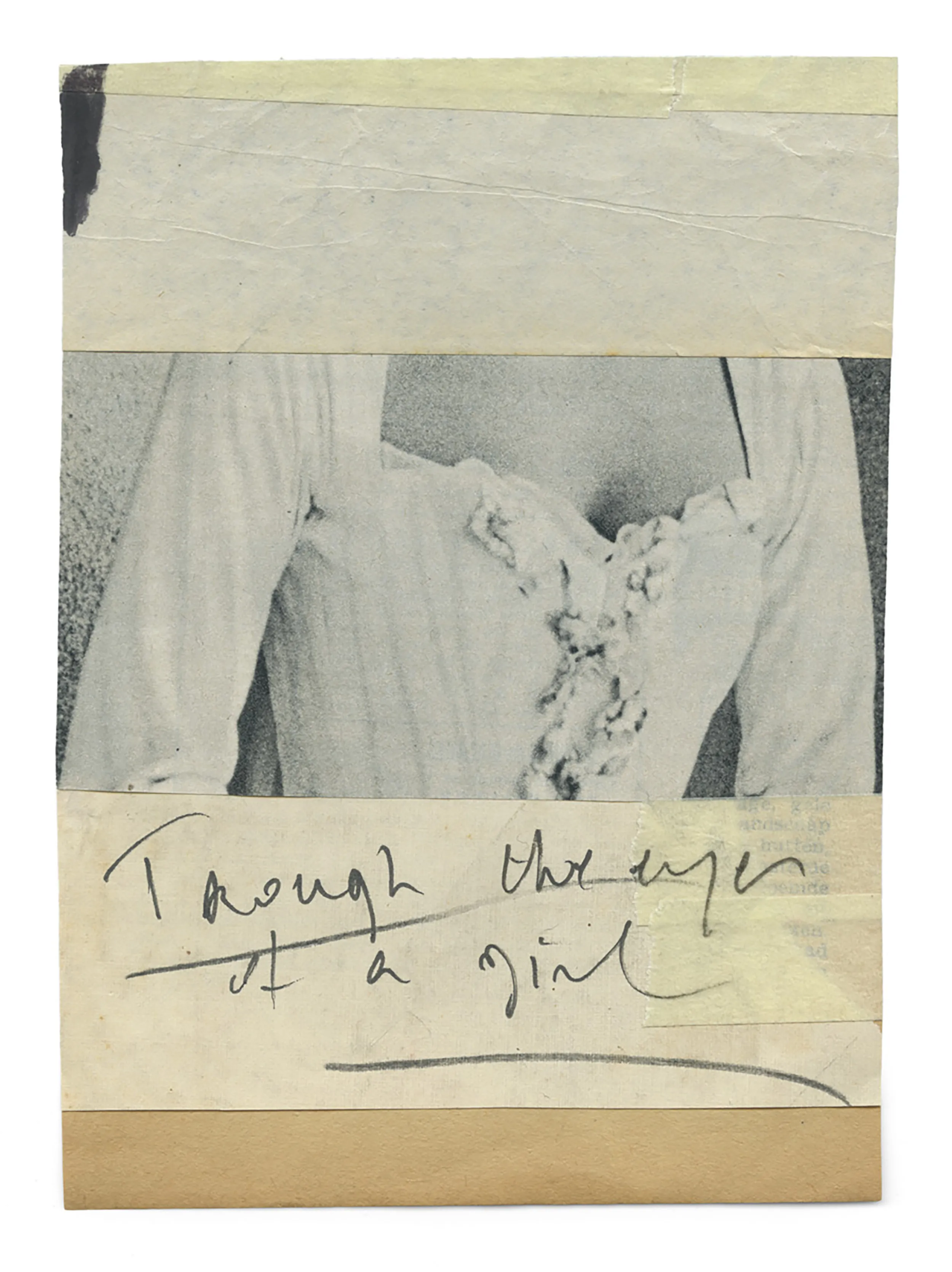
Katrien de Blauwer, Lyrics (4), 06.01.2025, 2025
Unique collage, 11,9 x 16.5 cm
In some of de Blauwer’s work we notice the inclusion of song lyrics, which are there as place-settings to guide us even further on a journey towards her own kind of contemporary feminism.
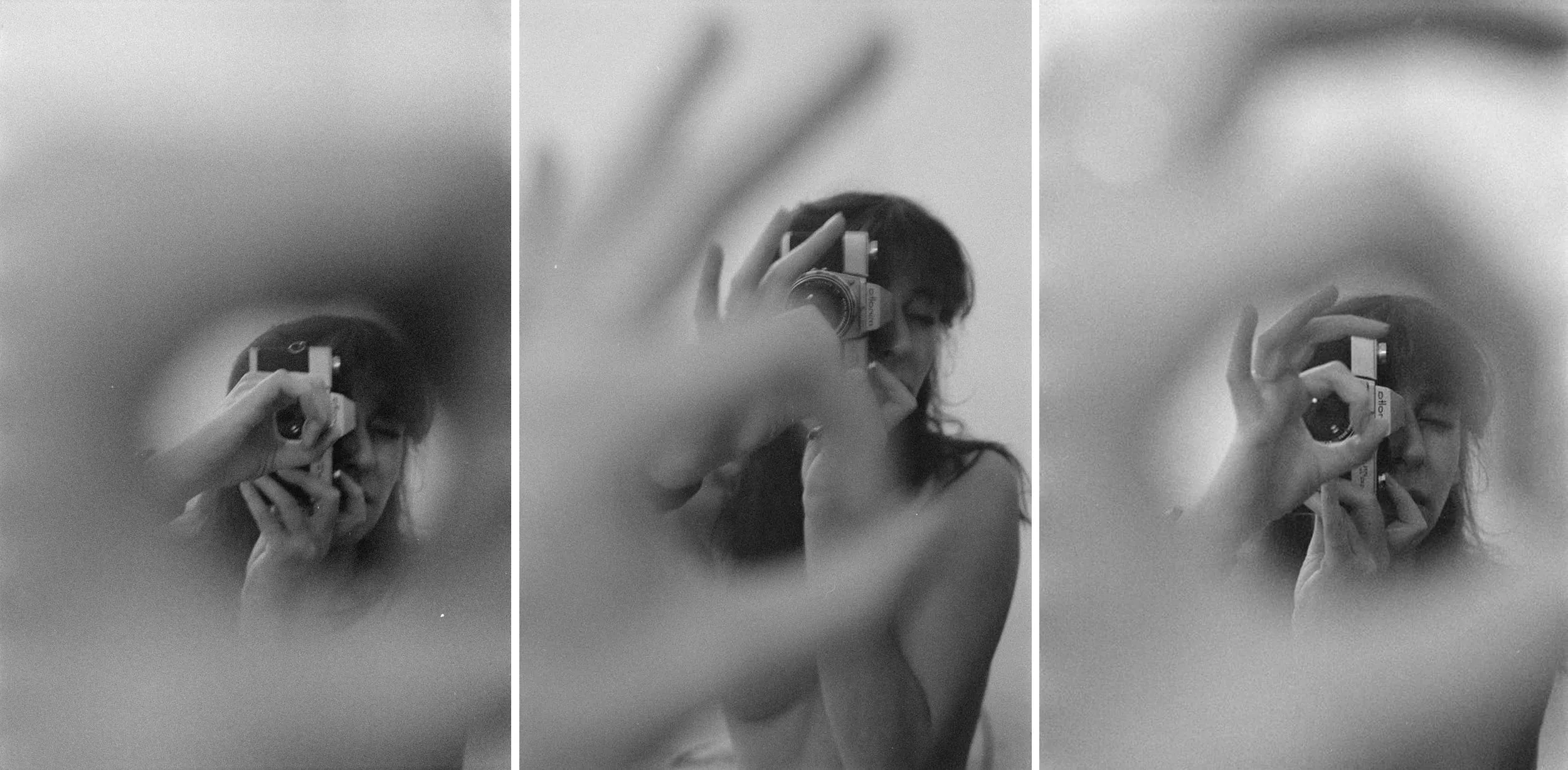
Janice Guy, Untitled, 1979/2026
Gelatin silver prints, 34.5 x 23 cm each
Janice Guy’s work is groundbreaking in that the artist was one of the first female artists to turn the camera onto her own body in the mid-70s and to use the mirror as a potent terrain for a discourse around the ownership of nude selfhood and its representation. We also witness a practice which merges the hand-colouring of gelatin silver prints, something we find some 50 years later in the work of Kurland and de Blauwer. These three artists from the same generation are working together without knowing so, as part of an elongated conversation with no necessary timeframe. A thread which connects women not as competitors, but as unlikely collaborators, across continents and decades.
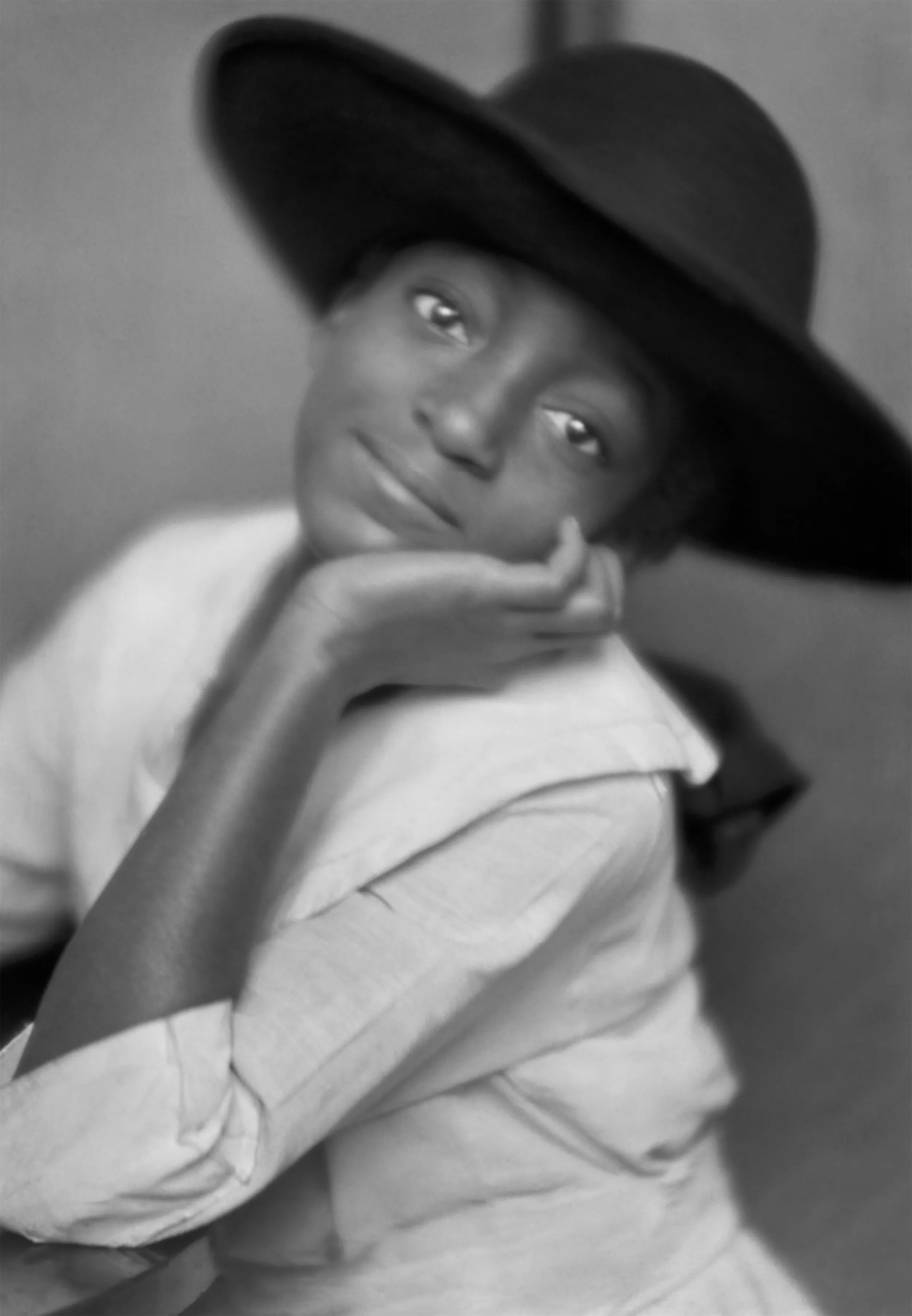
The Estate of E.O. Hoppé, Irene Louise Harrison, ca. 1921
Platinum palladium print, printed later, 23 × 28 cm
In Hoppé’s portraits of women, he might be holding the camera, but the power remains with the sitter, for the results feel pure, kind. There are no tricks here. What you see is what you get. We are almost left wondering if the resonance of this work comes fully to fruition 100 years after these images were taken.